The AVAF takes part once again in the IVAP Training Plan with a course on public integrity policies and prevention

Valencia, September 26, 2025.- The Valencian Institute of Public Administration (IVAP) has once again counted on the collaboration of the Valencian Anti-Fraud Agency (AVAF) in its Training Plan. The course “Public Integrity Policies and the Prevention of Fraud and Corruption Risks”, now in its third edition, was delivered online, with a duration of 20 hours and by public employees from the Agency itself.


The Valencian Institute of Public Administration, the body responsible for training policies for staff serving the different public administrations of the Valencian Community, aims through this training activity to promote integrity, transparency, and public ethics, the correct implementation and evaluation of public policies, and the efficient management of public resources. During the course, participants were introduced to the institutional system against corruption in the Valencian Community, framed within the national and international context, as well as to the regulatory developments of the Generalitat. The training also reviewed the obligations derived from Law 2/2023, together with preventive tools of urgent implementation in public institutions.


The first training session, on September 16, began with an introduction to Law 2/2023, regulating the protection of persons who report breaches of regulations and combating corruption. The second part of the session focused on the protection of whistleblowers, as well as on the legal advice provided by the Agency to complainants.


On Thursday, September 18, the regulation of reporting systems under Law 2/2023 was presented, highlighting the existence of internal and external reporting channels and the Agency’s complaint management procedures. The first two sessions were taught by Marita Oliver, AVAF training officer.


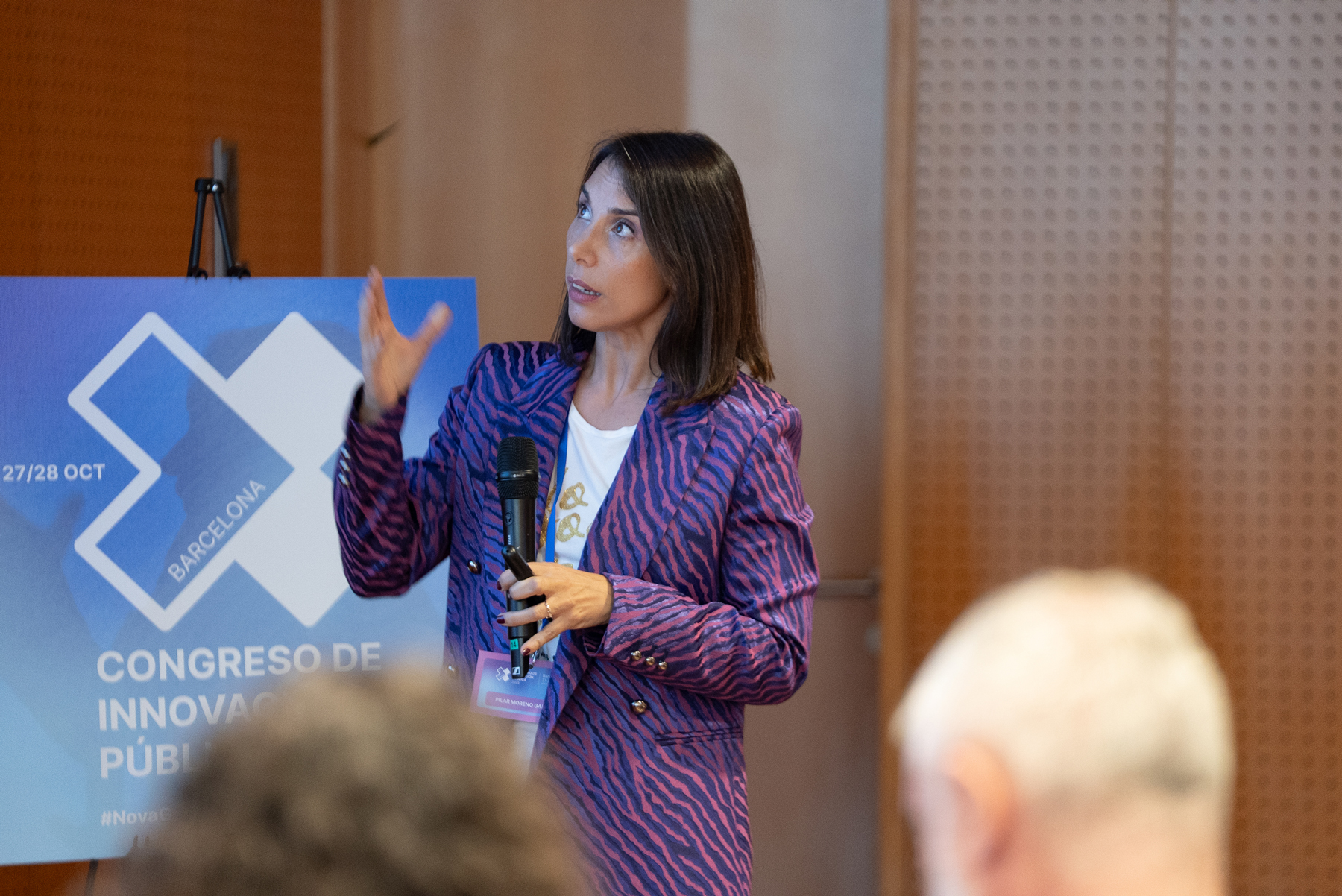
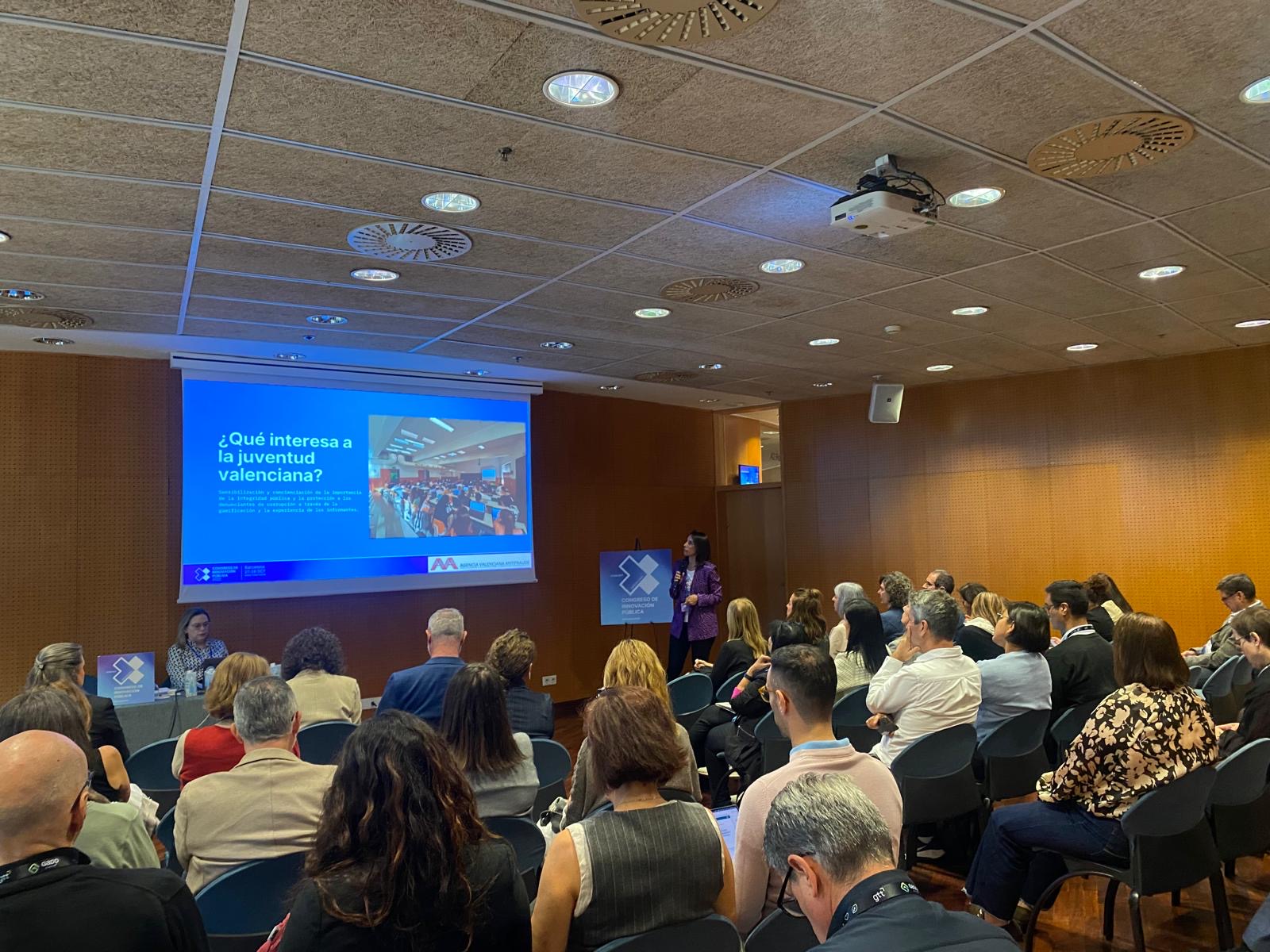
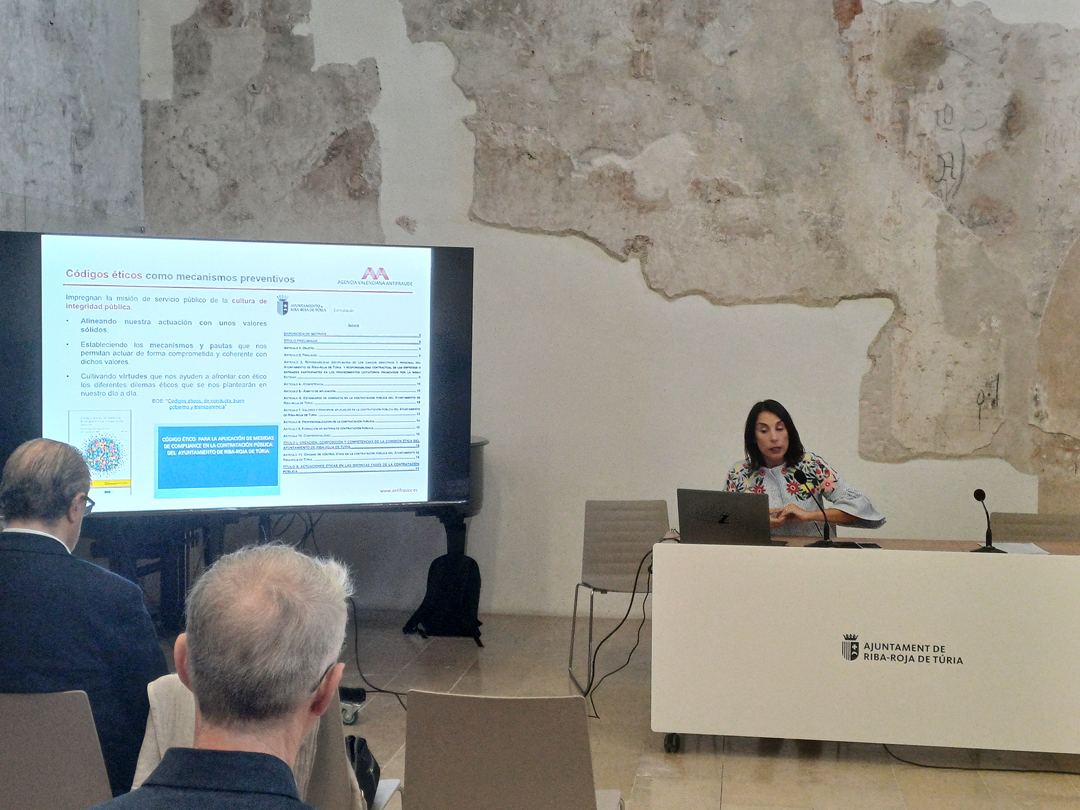
In the third session of the course, on September 23, Pilar Moreno, AVAF training officer, explained the need for public integrity plans in public institutions and presented numerous preventive initiatives regarding risks in public management, with special emphasis on risks in public procurement.


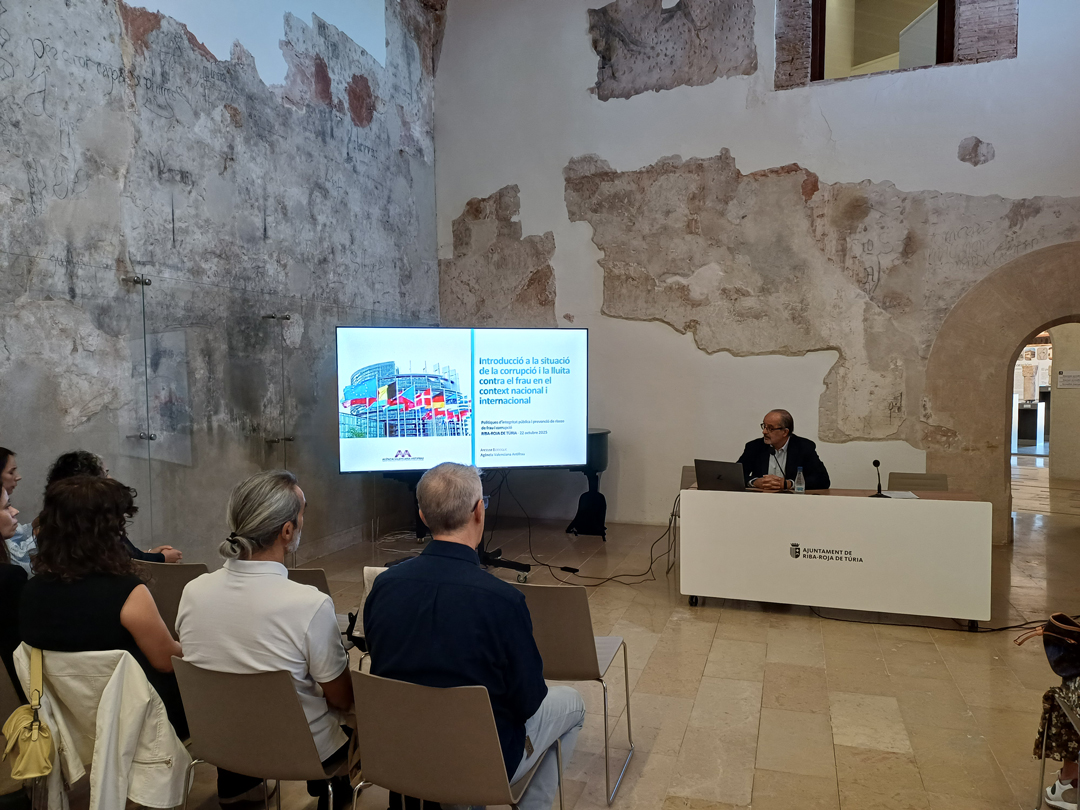
The Head of the Cabinet and Studies of the Agency, Anselm Bodoque, led the September 25 session, addressing the consequences of corruption and public policies to fight fraud, from an analysis of the international and national context.


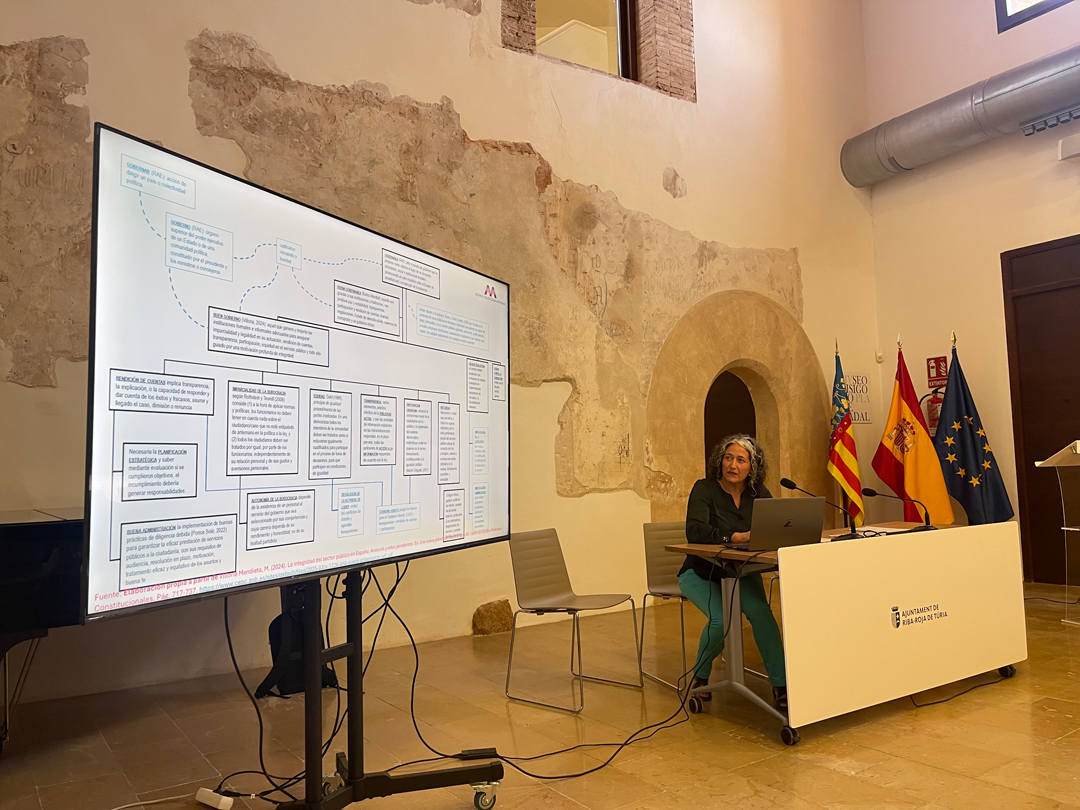
For her part, Mayte López, AVAF training officer, analyzed the situation in the Valencian Community and the regional regulations concerning the integrity system built over the last decade.


The active participation of students throughout the course culminated in a workshop on the proper management of conflicts of interest, led by Anselm Bodoque and the Agency’s entire training team. The course and workshops enabled lively and enriching debate among participants.


The Valencian Anti-Fraud Agency approves its First Equality Plan

Valencia, September 1, 2025.- The Valencian Anti-Fraud Agency (AVAF) has approved its first Equality Plan, whose overall objective is to consolidate an organizational culture committed to equality, eliminating any structural, mental, or customary barriers that hinder the full development of this principle.


The First Equality Plan will be in force for four years and applies to all AVAF staff. The text was drafted on the basis of a detailed participatory diagnosis carried out in May 2023, with the involvement of the entire workforce, using both quantitative and qualitative methodologies. The diagnosis identified as areas for improvement specific training on equality, as well as the perception that reconciliation of work and personal life may affect the professional opportunities of some employees.


The plan includes 19 lines of action structured around the following strategic areas:

  • Access to employment and career development: Ensure procedures and selection bodies incorporate equality and transparency, reinforcing equality training for the staff involved.
  • Shared responsibility in work-life balance: Promote the full and shared exercise of personal, family, and work rights without undermining professional promotion, including measures such as the right to digital disconnection.
  • Equality training: Promote the inclusion of a gender perspective in all internal and external training programs.
  • Balanced presence in decision-making bodies: Raise awareness to ensure the balanced representation of women and men in collegiate and decision-making bodies.
  • Prevention and protection against sexual harassment and harassment based on sex: Permanent dissemination of protocols, awareness campaigns, and psychological support, guaranteeing a safe environment and zero tolerance for such behavior.
  • Pay equality: Continue guaranteeing, through review and monitoring systems, the absence of wage discrimination on the grounds of sex.
  • Monitoring and evaluation: Establish a joint commission responsible for monitoring, evaluating, and reviewing the effective implementation of the plan, its indicators, and regulatory updates.
  • Labor rights of victims of gender-based violence: Promote awareness and exercise of rights and specific support protocols through training and awareness campaigns.
  • Mainstreaming and inclusive communication: Extend the gender perspective to all areas, campaigns, and communications, reviewing institutional language and images to ensure they are non-sexist.

The execution and evaluation of the plan will be entrusted to a joint commission made up of representatives of the entity and of the workforce, responsible for conducting annual monitoring, as well as evaluations at the two- and four-year marks.


With this initiative, the Valencian Anti-Fraud Agency aligns its equality policies with regional, national, and European regulations. For further information, the full text of the First Equality Plan is available at the following link.

Dismantling Anti-Fraud in Valencia

In reference to the interview published in a national newspaper, on June 21, 2025, with Mr. Fernando Jiménez Sánchez. After requesting the media, on two occasions, the publication of this opinion article to exercise the right to reply to Mr. Jiménez’s statements about the Valencian Anti-Fraud Agency and not obtaining a response about its publication, we share the opinion article sent:   Dismantling Anti-Fraud in Valencia   In recent months, a worrying practice has spread: constructing narratives where facts are secondary, data become accessories and victimization, fueled by growing polarization, becomes the discursive axis. Conferences, conferences and tribunes follow one another frequently, and although the Valencian Anti-Fraud Agency (AVAF) does not appear as a central issue, the opportunity to revile it with statements disconnected from reality is not wasted. It is even more serious if we consider that many of the rapporteurs have had links, direct or indirect, with this institution.   It seems that some would rather see the Agency disappear than admit that it may be run by people outside their circle of trust. Between nostalgic reproaches and epic stories of the past, an idealized image of the previous stage is constructed, contrasting it with an almost Machiavellian vision of the present.   In this context, Mr. Jiménez, in a recently published interview, responded to a question about the alleged “dismantling” of the AVAF with a double statement:   “Why have they destroyed the AVAF in practice? Well, it is closely related to the judicial expert reports that were being carried out by the investigation team of the corruption trials of the Zaplana era. It’s as simple as that. This destroys the country…”   In view of such a statement, it is appropriate to offer objective data: on May 16, 2024, AVAF officials defended the expert report referred to in court. That performance concluded that same day. The new director took office on July 23, 2024, and the judgment of the Provincial Court was issued on October 15, 2024. Chronologically, it is impossible for there to have been any intervention by the new leadership in that case. Therefore, the insinuation is unfounded and malicious. From the AVAF we wonder if an administrative infraction is being suggested or, directly, the commission of a crime. Hurling accusations without evidence, in the style of “throwing the stone and hiding the hand”, does not seem to be the procedure of an academic.   The AVAF depends organically on Les Corts Valencianes, not on the Government of the Generalitat Valenciana. Since August 1, 2024, the parliamentary groups have requested 55 files, all of them delivered in a timely manner. Most refer to actions from the previous mandate. When the new management took office, there was a live load of 659 files. Currently, and despite having received 331 new complaints in 2025, this figure has been reduced to 512.   As of 23 July 2024, the delay in the processing of complaints exceeded 15 months; Today, complaints filed in 2025 are being resolved within the deadline. In addition, 200 new entities have been added to the register of those responsible for the Internal Information System (67 public and 133 private).   Far from being diminished, the Agency’s powers have increased. I must also point out that the positions of Secretary General and Coordinator of the Evaluation, Verification and Inspection area have recently joined this Agency, following a selection process, incorporating a Lawyer from the Generalitat Valenciana and a Tax Inspector from the State Tax Agency. Files continue to be sent to the Public Prosecutor’s Office and its operational activity has been strengthened. All while keeping your budget intact.   It is striking that someone with Mr. Jiménez’s academic background – a professor, member of Transparency International and the advisory board of the Hay Derecho Foundation – would make such unfounded statements. Until their legal suppression, the aforementioned organizations were part of the AVAF’s Citizen Participation Council (CPC). He himself was appointed to that body directly by the previous director, without formally representing any entity.   The surprise is even greater if one remembers that, as a representative of the University of Murcia, together with the University of Lisbon, Mr. Jiménez prepared the report “Comparative perceptions of corruption in Spain and Portugal”, with logistical and economic support from the AVAF (October 2022).   Likewise, the previous management of the Agency was going to collaborate in a European project, with Mr. Jiménez himself as principal investigator. Despite the interest in the project, the new management of the AVAF declined to participate because it exceeded the scope of regional competence.   Perhaps the disagreement lies in the succession in the position of director. Mr. Jiménez’s candidate — also the outgoing director and the vast majority of the CPC — was not elected. The legitimate defence of a candidacy does not justify a campaign of constant discredit, which began even before the current director took office. Much less so when the criticism extends to the entire institution and, therefore, to its officials.   And they continue along these lines. In a conference on the protection of corruption whistleblowers in Spain with the presence of former heads of the AVAF, the debate revolved more around the “golden age” of the Valencian Agency than on the announced title. It could well have been titled: “When we were the best”.   During the event, someone claimed that the recent legislative reform had abolished the Agency’s sanctioning regime. The statement was denied, at the same event, by a lawyer from the AVAF. He recalled that Law 11/2016 continues to attribute sanctioning power to management and that Law 2/2023 reinforces it, recognising the AVAF as the regional competent authority for the protection of whistleblowers. Even so, the official recording omits the interventions of the AVAF representatives, preventing a complete technical vision of the debate and compromising transparency.   Paradoxically, those who today lament the alleged loss of the sanctioning regime did not apply it for seven years. The only sanction imposed in that…