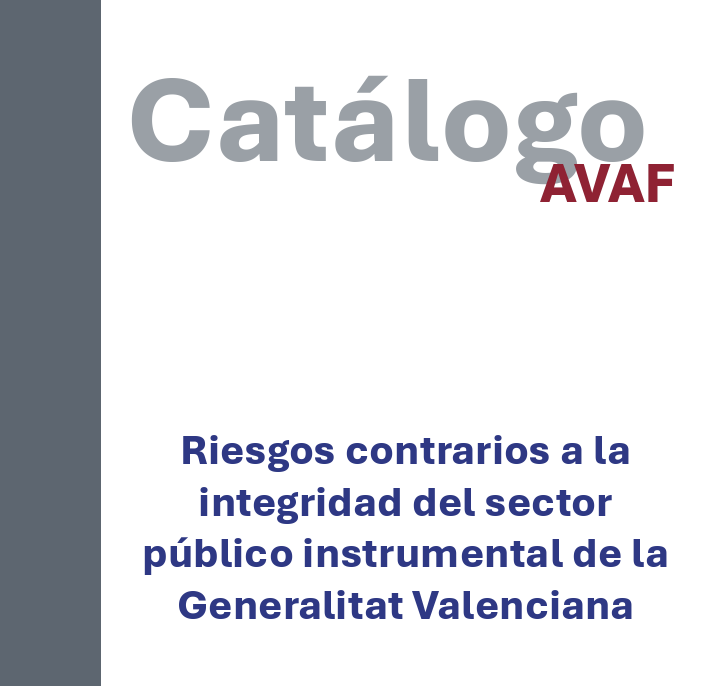


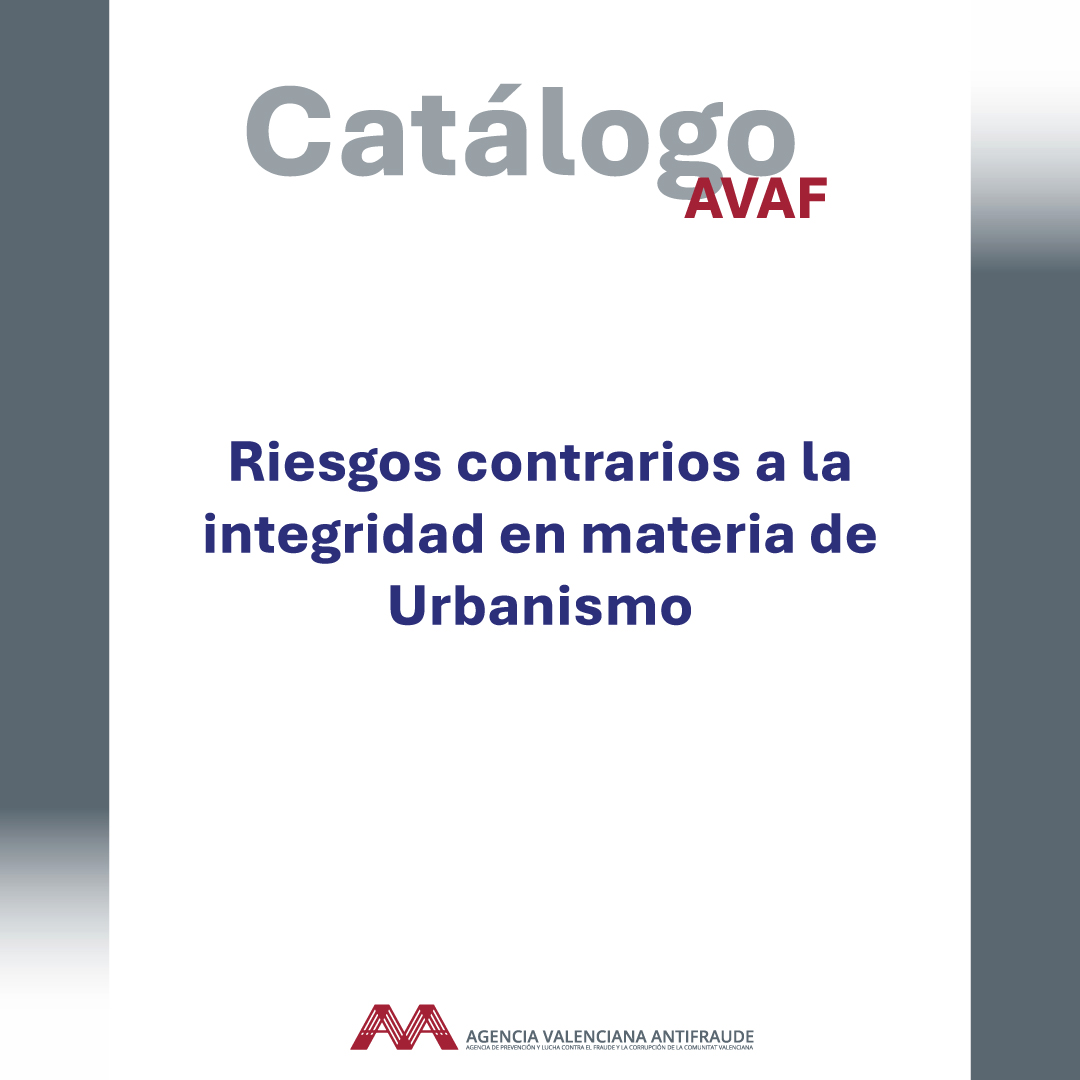
Valencia, 2 February 2026.- The Agency for the Prevention and Fight against Fraud and Corruption of the Valencian Community (AVAF) has published its new “Catalogue of risks against integrity in urban planning”, a technical document that identifies a hundred situations of vulnerability in the management of the territory. This work, issued in compliance with the Agency’s risk analysis functions, arises as a response to the historical problem of urban corruption in Spain and, specifically, after receiving fifty complaints about urban action in the 2024 financial year alone.
A vulnerable sector with an impact on local farms.
Urban planning has been for decades a focus of practices contrary to integrity, especially during the so-called “real estate boom”, where the legal system was distorted in favor of speculation. The AVAF catalogue warns that the abusive use of urban planning as a source of municipal financing has generated “economic asphyxiation” and budgetary tensions in local administrations, as the maintenance and service costs associated with new developments are not correctly assessed.
Main risks detected
The document systematizes 100 specific risks and proposes mitigating measures for each of them. Among the areas of greatest danger identified by the AVAF are:
- Personnel and resource management: The lack of qualified civil servants and the excessive outsourcing of public functions to external technical services or commercial companies.
- Conflicts of interest: The difficulty of detecting who is behind corporate networks in urban planning files and the lack of abstention from public office when it is mandatory.
- Urban discipline and inactivity: The “urban indiscipline” derived from administrative inaction, which has allowed the proliferation of illegal constructions and degraded areas without basic services.
- Poor asset management: The absence of an updated Inventory of Assets and Rights in many municipalities, which prevents an effective defence of public heritage and generates lack of control over endowment land.
Proposals for ethical and sustainable management
The AVAF stresses that sustainability in development is not a duty, but a necessity to avoid “devastating consequences” on the territory and public finances. To this end, the Valencian Anti-Fraud Agency urges institutions to implement public integrity frameworks that include prevention plans, codes of ethics, internal reporting channels and continuous training of staff.
In addition, a call is made to strengthen real transparency in decision-making processes, guaranteeing the right of citizens to access information on territorial planning and urban planning agreements.
The complete catalogue and its mitigating measures are available for public consultation at:
https://www.antifraucv.es/wp-content/uploads/2026/01/Catalogo_AVAF_Urbanismo.pdf